Tapeworms can infect animals and humans. They live in your intestines and feed off the nutrients you take in. They can live in your body for years and not cause symptoms. But if you have symptoms, they may include nausea, weakness, diarrhea and fatigue. You may also see worm pieces in your poop. Medications can treat most tapeworm infections.
Advertisement
Cleveland Clinic is a non-profit academic medical center. Advertising on our site helps support our mission. We do not endorse non-Cleveland Clinic products or services. Policy
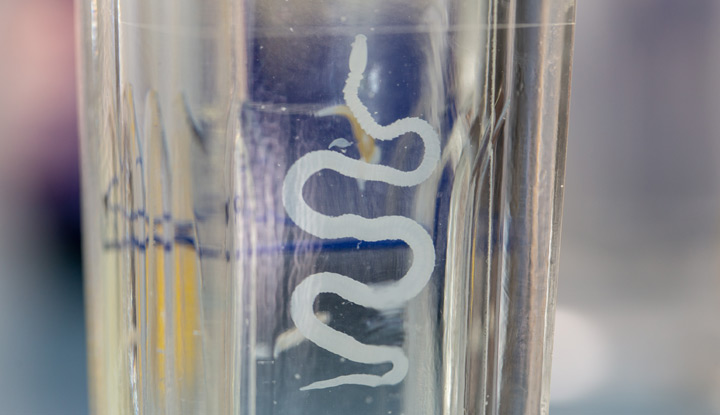
Image content: This image is available to view online.
View image online (https://my.clevelandclinic.org/-/scassets/images/org/health/articles/23950-tapeworm)
A tapeworm is a parasitic worm that lives in the intestines of a person or animal (host). It has a flat shape, like a soft measuring tape. It looks pale yellow or white. There are three distinct parts:
Advertisement
Cleveland Clinic is a non-profit academic medical center. Advertising on our site helps support our mission. We do not endorse non-Cleveland Clinic products or services. Policy
Tapeworms usually infect meat-eating animals, like humans, livestock, cats and dogs. If a tapeworm is from the genus Taenia, healthcare providers may call the infection “taeniasis.” These may include:
Other tapeworm species can also infect humans. These include Dibothriocephalus latus (fish tapeworm) and Hymenolepsis nana (dwarf tapeworm, which is a smaller type).
A tapeworm infection is when a tapeworm enters a host’s body. This usually happens through contaminated food or water. The tapeworm’s head attaches to the intestinal lining. It absorbs nutrients from foods and drinks. As it grows, it lays eggs. The eggs pass out of your body in your poop. This is how tapeworm eggs infect new hosts.
Tapeworm infections occur around the world. But they’re more common in areas where people commonly eat raw meat and fish or don’t have access to water and sanitation. Tapeworms can also spread through the fecal-oral route. For example, you can get a tapeworm by eating food or drinking water that comes into contact with infected poop. You can also spread it if you don’t wash your hands after using the bathroom, and someone touches an infected surface and then their mouth.
Advertisement
Healthcare providers can treat many tapeworm infections with medications.
Tapeworm infections come in two forms:
These are adult (mature) tapeworms that hatch and mature inside the intestines of a host. Some tapeworms can live for decades in your intestines and grow to over 80 feet (25 meters) long.
This type of infection can happen if immature tapeworms (larvae) enter your bloodstream from your intestines and go to other organs. They cling to your insides and form fluid-filled pockets (cysts). The cysts may not cause any problems. But if they get big enough, they can impact how well the affected organs work.
You can have a larval infection with or without an intestinal tapeworm.
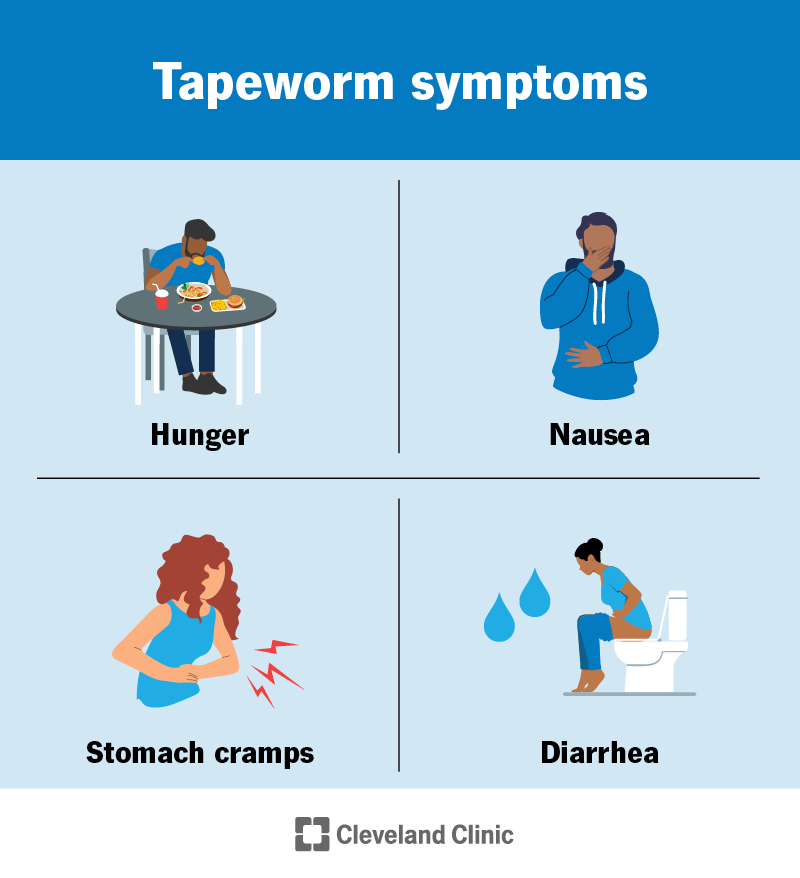
Image content: This image is available to view online.
View image online (https://my.clevelandclinic.org/-/scassets/images/org/health/articles/23950-tapeworm-infographic)
Not everyone has symptoms. But if you do, intestinal tapeworm symptoms may include:
Larval infections may cause symptoms like:
They may also prevent affected organs from working as well as they should.
Most people get a tapeworm infection by:
Mature tapeworms can’t survive outside of a host. But tapeworm eggs and larvae can. When infected animals poop, eggs and larvae can contaminate food and drinking water. Animals, fish and even insects that ingest the eggs or larvae then become new hosts. Humans can get a tapeworm from eating raw or undercooked meat. They can also get it from fruits and vegetables that have come in contact with contaminated poop or water.
Complications depend on a few factors. These include what kind of tapeworm you have, whether it’s intestinal or invasive, and where cysts are in your body. But without treatment, a tapeworm infection can cause problems like:
Pork tapeworms also cause cysticercosis.
A healthcare provider will:
If they suspect you have a tapeworm, they may recommend a poop (stool) test. They’ll examine a sample of your poop in a lab to look for tapeworm eggs or segments. They’ll also determine which type you have.
Advertisement
If you have a pork tapeworm, your provider will check for a larval infection. They may recommend a larval antibody blood test. They may also suggest an MRI or CT scan to look for cysts in in your body.
To treat an intestinal tapeworm, your healthcare provider will prescribe antiparasitic medications, like:
Providers most commonly recommend praziquantel. It forces the tapeworm to let go of your intestines. If the tapeworm’s neck doesn’t dislodge and pass from your body, the worm can create new body segments.
After treatment, your provider may recommend more stool tests over the next few months. These help ensure the tapeworm is gone.
If you have an invasive larval infection, your provider may recommend:
Advertisement
With a proper diagnosis and treatment, an intestinal tapeworm will die and pass from your body within a few days. But if you have a tapeworm and never discover it, it’ll eventually die naturally and pass from your body. But this may take years or even decades.
If you have an invasive larval infection and it doesn’t cause symptoms, your provider may recommend that you leave any cysts alone. The larvae will eventually die after a period of years.
It can be challenging to realize you have a tapeworm because they don’t always cause symptoms. And when they do, the symptoms may be similar to other common conditions. Call a provider if you notice visible tapeworm segments in your poop. This is usually the first sign of infection. Let them know about any possible exposures to tapeworms. Examples include foreign travel or if you eat raw or undercooked meat.
With a proper diagnosis and treatment, the prognosis is usually good. But if you have an invasive larval infection and cysts develop in major organs, like the heart or brain, your outlook can be poor. You can develop serious complications. Surgical treatments can also be challenging. Your provider will give you a better idea of what to expect according to your unique situation.
Advertisement
The best ways to prevent a tapeworm infection are to:
The idea of a tapeworm living in your body can give you the ick. And confirming an infection with a stool sample only adds to the “yuck” factor. But in a lot of cases, tapeworm infections are usually pretty mild. They often go away with a proper diagnosis and treatment. Catching it early is the best way to avoid any complications. So, it’s a good idea to contact a healthcare provider if you have symptoms after a possible exposure. They can also tell you the best ways to avoid spreading an infection to others.



Sign up for our Health Essentials emails for expert guidance on nutrition, fitness, sleep, skin care and more.
Learn more about the Health Library and our editorial process.
Cleveland Clinic’s health articles are based on evidence-backed information and review by medical professionals to ensure accuracy, reliability and up-to-date clinical standards.
Cleveland Clinic’s health articles are based on evidence-backed information and review by medical professionals to ensure accuracy, reliability and up-to-date clinical standards.
Need care fast? Cleveland Clinic’s Express Care and Urgent Care locations treat everything from sprains to sinus infections — no appointment needed.